TL;DR
Public-sector PMOs face unique hurdles like funding cycles, departmental silos, rigid procurement rules, and shifting political mandates. Building cross-functional visibility, aligning projects with strategic mandates, improving reporting, and investing in adaptable governance frameworks can help PMOs navigate complexity and deliver public value effectively.
Public Sector PMO Challenges
It’s not always easy to lead a public sector PMO.
Projects are complex. Many stakeholders are involved. You’re facing limited budgets. Executives aren’t always on board. You’re contending with the public’s perception.
And then there is the reality that projects often fail. In fact, government tech projects costing more than $6M succeed just 13% of the time, according to a report from the Standish Group.
What are the most common roadblocks facing public sector PMOs? And what can you do to combat them?
Explore the top roadblocks public sector PMOs face—from silos to shifting priorities—and learn how to overcome them with practical solutions and solid PPM software.
PMO Challenges in the Public Sector
Teams work in silos and can’t see the full picture. You’re stuck in spreadsheets and ad hoc reporting. Political shifts and funding cycles disrupt long-term planning. You lack the tools to prioritize and staff projects strategically. Your PMO struggles to prove its value and achieve the mission of the greater organization.
PMOs face numerous challenges in the public sector. Let’s take a look at the most critical obstacles.
Improper Resource Management
Resource planning for public institutions is essential. You’re contending with budgetary constraints. You may be dealing with understaffing and a lack of materials. Without proper resource management, you could fail to prioritize and plan. You might also have poorly structured teams and experience a shortage of team members with the right skills.
Complex Regulations and Compliance
Your office is governed by numerous laws and regulations. There is a lot of red tape, as well as siloed operations. These legalities can take a long time to navigate, leading to project delays and resource procurement delays.
Shifting Goals and Objectives
It’s critical to balance the long-term mission of a department with the need to stay nimble as priorities change. For example, using Prism PPM, a State Department of Health quickly assembled project plans, merged departments for efficiency, and started mission-critical, life-saving projects when the pandemic struck.
Lack of Stakeholder Buy-in
You’re accountable to both executives and constituents. In other words, you must report to everyone. You need to attain buy-in in order to achieve your goals.
Benefits of Implementing PPM Software in Government Organizations
Government project management isn’t easy. But PPM software supports transformation in government organizations, making it easier to deliver more successful projects while keeping everyone informed. Here’s how.
Allows You to Cope with Change
Rapidly changing priorities, shifting goals, a lack of a solid project roadmap, and silos can derail any project. With project portfolio management software like Prism PPM, you get the tools to ensure you’re prepared when change inevitably happens. You will be well-equipped to cope with any obstacles that stand in your way.
Ensures Transparency
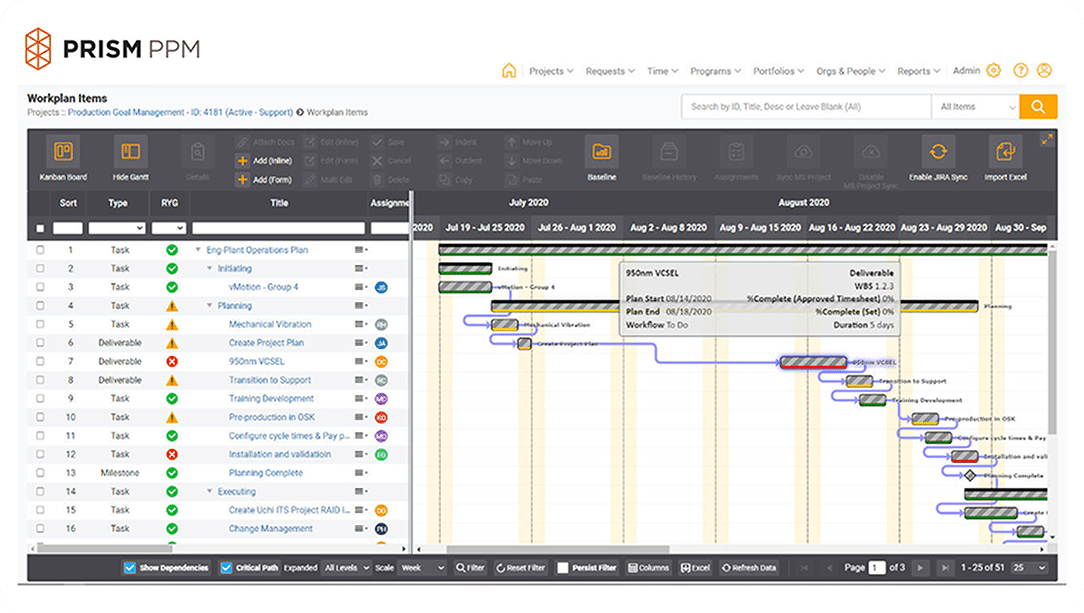
PPM software helps you stay accountable to executives and constituents by offering clear visibility into your activities and project progress. Prism PPM tools like Program Management and Customized Reporting give you insight into your performance and the overall health of your entire portfolio.
Improves Continuity
Thanks to tools like customizable templates and visual workflows, you can ensure continuity across projects and entire portfolios. This allows your team to improve processes and run your projects smoothly without hiccups.
Helps Prove the PMO’s Value
Government PMOs are three times more likely to see threats of closure than PMOs across other industries.
You need to prove your value.
PPM software comes equipped with comprehensive dashboards and reporting, helping you to establish and fulfill public sector KPIs in a demonstrable way. This allows you to show how you are meaningfully contributing to project improvements by, for example, lowering failure rates and improving efficiency.
Offers Security
Compliance and security are of the utmost importance when you’re dealing with sensitive public sector issues. Prism PPM is SOC 2-certified, so you can be confident that your data is safe and secure across the platform.
How to Address Public Sector PMO Challenges
- Prioritize the right projects.
A well-defined project intake process ensures that everyone understands how you choose and prioritize projects. Use Prism PPM’s built-in Business Value Assessment tools to prioritize the projects that deliver the most impact, then staff and start them quickly.
- Clearly define goals.
All projects start with clear goals. As part of your goal-setting, describe deliverables, establish milestones, and solidify timelines. This will give you ways to track and measure progress.
- Secure a project champion.
Finding a project champion (or champions) who will advocate for you helps ensure stakeholder buy-in. It also allows you to hone your project goals and needs.
- Establish lines of communication.
Strong communication also leads to stronger stakeholder engagement. Keep communication open, looping in all relevant parties. Update them regularly to promote greater transparency.
- Ensure proper resource management.
Work with your finance department and leadership to ensure you have the necessary resources for your projects, including people, tools, and skill sets.
- Invest in a portfolio project management platform like Prism PPM.
This will allow you to manage moving parts, identify roadblocks, budget effectively, track KPIs and progress, and observe metrics.
- Continue to refine and measure progress.
By tracking progress and adjusting as needed, you are contributing to a culture of continuous improvement.
Public Sector PMO Modernization: A Case Study
“We recognized the need to move beyond gut feelings about workload and establish a clearer, data-driven view of team capacity.” —Caitlin Ornelas, Utility Business Systems Administrator, City of Roseville
The City of Roseville’s Electric and Environmental Utilities departments were siloed. Each had a strategic plan for their organization, requiring skilled employees to deliver on their mission and goals.
But the departments share utility systems projects. That meant they were sharing services staff from the utility business systems team, which led to resource and reporting challenges, including:
- Difficulty managing competing priorities between the two utilities
- Limited insight into resource allocation
- No data-driven way to justify new hires or determine skill set demands
- No way to demonstrate the impact of the utilities’ combined efforts
The City of Roseville created a new Utility Business Systems team in September 2024 and evaluated several different resource and portfolio management solutions. They selected Prism PPM, looking to empower the Business Systems team with tools for efficient resource management, detailed project management, and advanced reporting.
Prism PPM’s dedicated implementation team focused on creating visibility into project staffing and reporting by:
- Creating transparency across team members’ workloads with views into resource utilization
- Establishing standardized project plans with portfolio-level resource allocation tracking
- Configuring custom reports and dashboards to track the City’s most important metrics
Already, the City of Roseville has already seen significant improvements, including:
- Transparency: They can now visualize resource allocation across initiatives and departments. They have also established baseline metrics for time spent on operations vs. discreet project work and developed a centralized platform to enhance team visibility into individual work efforts.
- Efficiency: With a centralized system for all project data, teams spend less time questioning the details and more time valuable work. There is also a joint understanding of projected utilization, allowing managers to work together to balance project priorities with other mission-critical work.
- Future Impact: Now, the team is better equipped to better align resource allocation with their mission and make data-driven decisions about future hiring needs, offer greater transparency regarding utility system investments, and justify spending thanks to tracking and reporting.
The City of Roseville is able to demonstrate the tangible value of the behind-the-scenes work that directly impacts the City of Roseville’s ability to better serve its constituents. Learn more.
What Should a Modern, Effective Public Sector PMO Look Like?
Modern public sector PMOs don’t operate in silos. They are instrumental in organizational strategy, helping the agency achieve its goals. They have clearly defined goals and roles. They align projects with the governmental body’s vision and purpose.
Public sector PMOs must be agile and adaptive to changing circumstances, making data-driven decisions and attaining stakeholder and public buy-in to ensure successful outcomes for everyone.
Prism PPM supports strategic alignment in government projects, boosting your success rate for even the most complex project portfolios. Contact us today to learn more about how we can aid you in overcoming challenges and meeting your goals. Book a 30-minute consult or a 60-minute demo today.