
TL;DR
To move from a tactical, “nascent” office to a strategic partner, PMOs must shift from administrative task-tracking to driving business value. By establishing strong foundations, the PMO removes organizational silos and ensures every project is a direct driver of corporate strategy.
- Ditch the Spreadsheets: Reliable data requires dynamic PPM tools to provide real-time visibility and eliminate error-prone manual manipulation.
- Define a Value-Driven Mission: Audit current processes and align PMO activities with executive priorities to move beyond simple reporting.
- Balance Your KPIs: Use leading indicators (like capacity forecasts) to predict future outcomes and lagging indicators (like benefits realized) to assess past impact.
- Implement Value-Based Intake: Evaluate and approve project requests based on their strategic alignment and potential ROI.
- Standardize Resource Management: Move from “doing more” to “doing what matters” by measuring resource utilization per strategic initiative.
Building a PMO with Strong Portfolio Foundations
Project management offices are steadily evolving, moving away from strictly administrative and bureaucratic functions to becoming integral to organizational strategy and value delivery. In order to serve this mission, however, you must establish strong PMO foundations. How do you progress from a nascent to structured enterprise?
Building an innovative and strategic PMO requires more than just tracking tasks. According to the PMI, the PMO standardizes governance, facilitates resource management, and establishes methodologies and tools for usage across the company. With strong foundations, it removes silos, governs effectively, and supports better outcomes.
Learn how to create an impactful PMO that drives transformation across the organization.
Moving From a Nascent to Structured PMO
Solidifying strong PMO foundations will allow you to progress from a nascent to structured enterprise. But what, exactly, does that mean?
The nascent (or early) PMO largely focuses on administrative tasks. It may have some established processes, but they are not standardized or structured. Silos exist across the organization, meaning projects are disconnected from one another and overarching goals. As you can see, the nascent PMO is not ideal.
The structured (or mature) PMO promotes strategic alignment, connecting individual projects to larger company goals. It governs portfolios, manages resources, and realizes benefits. It has standardized practices and methodologies across the organization and tracks progress and outcomes, not just budgets. This is where you want to be as a PMO.
Stages of PMO Maturity
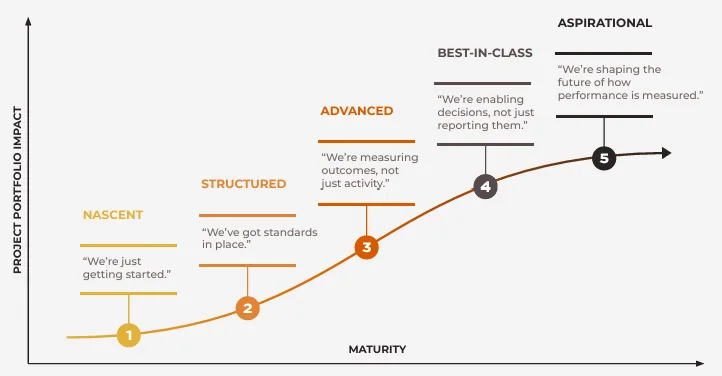
As you’re establishing your PMO foundations, consider the five stages of maturity. They reflect different levels of competence regarding portfolio governance and project management throughout the organization.
Nascent
In the earliest stages of PMO maturity, the office’s processes are inconsistent. The organization is just beginning to focus on portfolio management as opposed to individual project management. There may be basic visibility into data, but you don’t have a comprehensive view. If you have any KPIs in place, they focus more on lagging (reactive) indicators vs. leading (proactive) metrics.
Structured
A developing PMO is evolving, with some repeatable procedures in place. Still, processes aren’t fully standardized across the organization. You are still putting KPIs in place, and many of them are lagging, with data largely based on what has already occurred. You are mainly reactive rather than proactive, focusing on past information instead of future performance. Building governance is in-progress, so to speak.
Advanced
At this stage, you have honed and standardized your processes. You have KPIs in place that correlate to your organization’s mission and goals. You are tracking metrics and progress with established systems and tools. You have access to more reliable data, meaning you can lean more heavily on leading indicators as opposed to lagging ones.
Best-In-Class
You are on the path to a well-structured and mature PMO. You consistently use carefully chosen KPIs and make data-driven decisions. You are proactive about your management and are constantly monitoring your projects and processes. The enterprise is more efficient, and practices are being applied across projects and throughout the organization. You link all or most initiatives to business objectives.
Aspirational
With consistent practices and procedures in place and KPIs fully implemented and aligned with your strategy, you are now focused on continuous improvement. You are looking to the future, rather than looking backward. While you use lagging indicators, you’re also relying on leading indicators to predict and anticipate future outcomes. You have a goal-oriented culture and a company-wide commitment to reporting.
Foundational Steps of PMO Maturity
Strong PMO foundations move from simple tracking to a standardized, well-governed enterprise. To move from “nascent” to “structured” maturity, start from the following steps.
Establish the Mission
Begin with your purpose. Think beyond administrative functions and reporting. You want to deliver value. You have to figure out what business value means to you.
This starts with auditing your current processes to understand where you are and where you need to improve. You need to meet with stakeholders to determine their priorities and determine how they align with your activities. This will help you decide how to prioritize your portfolios, programs, and projects and create a strategy down the line.
Determine the PMO Structure
The next step is to define the PMO structure. Determine ownership of responsibilities and establish a hierarchy of decision-making. The org chart will include program managers or owners, project managers, sponsors, stakeholders, and PMO leadership, among other roles as necessary. These individuals handle high to low-level responsibilities, ensuring your framework accounts for larger portfolios and discrete projects alike.
Roles must be clearly defined, with every individual involved knowing how they fit into the bigger picture.
Attain Buy-in
To ensure proper governance, you need buy-in from leadership. That doesn’t mean bending to their every will. It does mean demonstrating your case for your PMO’s structure, prioritization framework, policies, and needs.
Stakeholders will probably have their own priorities, and they may not align with your own. Your job is to show them your value and why certain initiatives take precedence over others. This will require ample data, so you need to gather information that supports and fuels your case. When you attain buy-in from executives, you will secure the funding, staffing, and resources you need to ensure you continue to generate value.
Establish Standards and KPIs
Standards and KPIs need to move beyond the iron triangle, which focuses on ensuring that projects have been completed on-time, in-scope, and within budget. This is a lagging indicator, looking at past performance rather than forecasting the future—the things you can change.
A balance of both leading and lagging KPIs is essential for a mature PMO. Establish consistent project metrics for assessing how well you are performing. KPIs should connect to your overall goals and mission as an organization.
Some examples of metrics to track include:
- Process improvement
- Benefits realization
- Budget optimization
- Resource utilization
Create a Value-Based Intake Process
A value-based intake process is critical for prioritization and resource management. This is a means of evaluating and approving project requests. All project managers and other project owners should understand the criteria you will be using to assess potential initiatives.
By creating an intake system, you can better align projects, ensure that nothing important is left to change, and better allocate resources.
Leverage Data-Collection and PPM Support Tools
65% of the top 10% of PMOs use data analytics “extensively.” But they don’t pull this information from nowhere. In order to leverage data in a meaningful way, you need the right tools. Look for comprehensive project portfolio management (PPM) platforms that offer real-time reporting and insights into progress, performance, and results. For example, Prism PPM provides ample reporting and dashboards show how you’re doing at meeting benchmarks and overall objectives.
Focus on Continuous Improvement
No PMO remains stagnant. By fostering a culture of continuous improvement, you promote efficiency, productivity, progress, stakeholder engagement, and quality results. Keep evaluating your processes, standards, policies, and workflows. You will inevitably discover bottlenecks and ways to enhance the PMO’s activities.
It can be helpful to establish a framework for routine PMO assessment. That way, you can standardize your method of evaluation and ensure you maintain consistency and momentum. This also helps your team continue to innovate and produce exemplary results.
Success Factors of the PMO
Once you’ve successfully solidified your PMO foundations, you need a way of ensuring that you’re meeting all your indicators of success. Important factors include:
- PMO Governance: Establish a framework for following workflows, making decisions, and otherwise prioritizing initiatives.
- Resource Management: Create a standardized approach to updating, forecasting, managing, and allocating resources.
- Standardized Methodologies: Whether agile, waterfall, or a hybrid approach, you should have a standardized methodology in place for delivering and documenting projects successfully.
- Structure with Roles and Responsibilities: Ensure you have an organizational hierarchy with clearly defined roles and responsibilities for everyone involved in projects and portfolios across the organization.
- Stakeholder Engagement: You must have stakeholder buy-in and engagement. In order to accomplish this, consider adopting project sponsors to champion your initiatives and “sell” them to upper management.
- Framework for Continuous Assessment: Keep evaluating and refining your processes. Establish an approach for reviewing and updating your processes to continue to deliver benefits.
- Data and Reporting Systems: Use a digital system that aggregates data and offers reporting capabilities. These features allow you to assess how you have been doing and effect better outcomes in the future through data-backed insights and analytics.
- KPIs: These are important metrics for measuring benefits realized vs. planned. By tracking KPIs, you have a solid framework for setting and aligning objectives with overall organizational goals.
You should customize this checklist according to your organization’s priorities, goals, and procedures.
Conclusion: Driving Holistic Change
Solidifying strong PMO foundations starts with understanding your role as a catalyst of organizational progress. By moving beyond the nascent phase and delivering projects that help you meet your enterprise goals, you will achieve better strategic alignment and support positive outcomes.
But you can’t do it alone.
Prism PPM is your partner in becoming a strategic PMO. The comprehensive project portfolio management platform provides the consolidated real-time data needed for holistic transformation. Book a 15-minute consult or a 45-minute demo to find out more.