Key Takeaways
- The Problem: Organizations often fall into the “process trap,” excelling at task execution (doing things right) while failing at strategic alignment (doing the right things).
- The Cost: Ineffective project performance results in an average waste of $97 million for every $1 billion invested.
- The Solution: Transitioning from basic Project Management (PM) tools to Project Portfolio Management (PPM) software provides the high-level visibility needed to bridge this gap.
- The Impact: PPM enables PMOs to optimize resource capacity, ensure financial accountability, and increase project success rates by up to 38%.
Bridging the ROI Gap
“On time and under budget” is no longer enough to prove project success. Today, projects need to generate real value.
A study entitled ROI in Project Management notes that measurement of return on investment is a tool for evaluating whether project outcomes align with strategic objectives and “contribute to sustainable value creation.”
In order to stop wasting money on projects that don’t drive value, you need to have a clear understanding of where your money is going and how your projects are paying off. Project management tools don’t give you the full picture. Project portfolio management platforms do.
Discover the difference in PPM vs PM software ROI and learn how switching your platform closes the ROI gap through strategic alignment and resource optimization.
Why Is Proving ROI So Important?
Traditionally, to calculate project ROI, you use the following formula:
ROI = [(Financial Value – Project Cost) / Project Cost] x 100
But this is a bit simplistic.
You can achieve financial value that is not immediately obvious. Some projects are a slow burn, delivering results long after the bulk of the work has been completed.
Proving ROI for the software you use for your project is a bit complex. That’s partly why investing in comprehensive PPM software is so important.
These tools don’t just show you how much you earned from a discrete project at face value; they continue to track metrics and results after project launch, compare them to other initiatives, and measure numerous factors, not just money invested and money immediately earned. You will gain greater visibility into your portfolios, helping you determine how to prioritize and demonstrate results to leadership at your organization.
You’ll be able to assess efficiency, risks, scope, resource allocation, and overall impact. These factors all contribute to the return on investment. Ultimately, ROI compares the cost of implementing a platform to the value derived from the results.
PPM software is instrumental in proving that your efforts are paying off in several senses: in terms of efficiency, resource management, risk avoidance, and money.
Case Study: York University
York University, Canada’s third-largest university, manages a portfolio of about 90–150 IT projects in progress at a given time. Before adopting Prism PPM, York relied on PM tools and spreadsheets, which led to wasted time spent aggregating data and manually reporting.
Once the university made the switch to a more comprehensive project portfolio management system, it was able to quickly aggregate project data, better manage resource planning, and provide necessary structure to support project governance.
Overall, York derived an excellent ROI from leveraging Prism PPM:
- 3 hours spent on reporting vs. several days
- 100% visibility into resources and capacity
PPM vs PM Software ROI: Where Project Management Tools Fall Short
While PM tools are usually cheaper than PPM platforms at first glance, PPM systems deliver a greater ROI long-term. Here’s why.
No Enterprise-Wide Portfolio View
When you don’t have visibility into your entire portfolio, you risk having a low portfolio value density, a high volume of projects that deliver little overall value or impact. Or, you may have too many projects on your plate simultaneously, and they’re consuming too many resources at once. You may be spending too much time on low-value projects and not enough on high-value initiatives.
The bottom line: You need to be able to visualize the entirety of your project portfolios to properly contextualize them.
Lack of Proper Integration
Rudimentary project management tools often don’t have integration capabilities with your other technology. This often leads to data silos and means a lot of time wasted on manual reporting.
Manual data entry can also cause errors to slip through the cracks.
Poor Resource Utilization
PM platforms don’t give you a wide-view lens of the resource allocation across the enterprise. But this feature is necessary for resource optimization, ensuring that your people, tools, and money are distributed according to the value projects deliver.
A PPM platform gives you insight into resource consumption and capacity management for entire portfolios, not just individual projects. That allows you to prioritize more effectively.
Limited Reporting Features
To manage comprehensive and complex portfolios, you must be able to see the data and understand how your efforts are paying off—or not paying off.
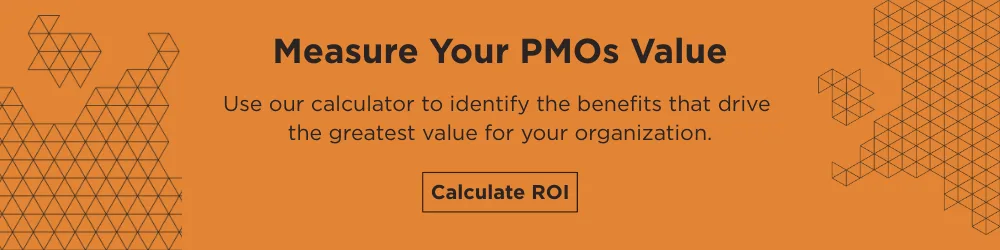
PPM systems like Prism PPM offer extensive reporting features so you have excellent data at your fingertips. These features allow you to track performance and know how your projects are delivering.
Difficulty with Risk Management
It’s difficult to manage risk across your portfolio when you’re only focusing on one specific project at a time. That’s a limitation of PM tools.
But PPM platforms allow you to see enterprise-wide risks so you can take action immediately. For example, Prism PPM gives you a “What-If” scenario planning feature that maps out various scenarios and how changing circumstances will affect the outcomes.
Limited Ability to Demonstrate PMO Strategic Value
You must demonstrate strategic value, and that’s hardly possible with a simple project management tool. These more rudimentary tools can’t connect tasks to high-level goals.
PPM platforms are built to do just that. Through features like project mapping, you’ll enjoy greater transparency and be better equipped to connect all projects to broader objectives.
Financial Benefits of PPM Software
Now, let’s look at benefits realization. What are the advantages of moving from PM to PPM software? Let’s take a look.
Increased Automation
Spend significantly less time spent on manual data entry and calculation. Save time (and remember, time equals money) with AI-driven PPM platforms, which offer greater efficiency and more accurate results.
Many tools, including Prism PPM, use automation to deliver error-free results more quickly.
Fewer Low-Value Projects
You won’t waste time on initiatives that add little to no value. A PPM platform gives you a holistic view of your portfolios so you know which projects are primed to deliver the most value. Through features like resource management and reporting and dashboards, you can see which projects will actually pay off.
Shift from Reactive Reporting to Predictive Analytics
Moving from reactive to predictive analytics will help you catch errors before they happen. You’ll be able to take a proactive approach to risk mitigation and deliver stronger results. A PPM platform offers ample data to help you predict problems, rather than react to them after they’re already escalating.
More Informed Decision-Making
With more data on hand, including predictive analytics, you will make more informed decisions. Data-backed decisions are better decisions. You’ll learn how your projects perform and what your customers or clients want. Then, you can adjust your strategy and practices to meet those needs.
Greater Agility
Project management is a dynamic landscape. With PPM software, you will be able to see where you are and how you’re doing at any given point. That allows you to pivot quickly to respond to changing demands if need be.
How to Measure PPM Software ROI
Measuring PPM software ROI requires:
- Establishing a baseline
- Creating and tracking KPIs, such as resource utilization, on-time delivery, budget adherence, and strategic alignment
- Listing all PPM software capabilities and potential benefits
- Adding up the total cost of purchasing and using the PPM platform, remembering to include factors like training costs
- Continuing to track and measure the benefits
Use our PPM Software ROI Calculator to simplify the process. This tool will allow you to identify the benefits that deliver the greatest value for your enterprise and calculate the potential returns.
Conclusion: PPM vs PM software ROI
York University found that Prism PPM’s platform made staffing more effective and requests more accurate with greater visibility into resourcing and capacity. Report generation once took as many as six working day days per month. Now? It only takes a handful of hours.
Overall, implementing a robust PPM solution like Prism PPM has allowed the University IT group to optimize portfolios across departments, thereby improving efficiency and project governance.
York, of course, is not alone in seeing its operations and entire enterprise transform after moving from project management to project portfolio management software. While PM tools may be fine for organizations that only have a couple of projects at a given time, those with complex and comprehensive portfolios need a superior solution.
PPM vs PM software ROI is clear: PPM software offers exhaustive reporting, risk management, resource optimization, and strategic alignment. Basic PM tools are insufficient for enterprise-level financial health.
So, how do you ensure and prove PMO strategic value?
Prism PPM is the catalyst for transforming a PMO from a “delivery office” into a “value driver.” It takes a high-level approach to your project portfolios, confirming alignment with your organization’s strategic goals and helping you achieve sustainable growth. Book a 15-minute consult or a 45-minute demo to find out more.