
“The overall difference is that we have that visibility to work together as a team. Prism PPM has created more momentum toward getting things done on time and ensuring things don’t get missed.”
—Caleb Sandahl, PMP, Project Manager, Intek Plastics
Manufacturing company Intek Plastics was focusing on growth through acquisition and needed an efficient way of managing post-merger IT projects. How could they realize value from their investments quickly and seamlessly?
Previously, they had relied on Excel spreadsheets. That approach was fraught with complications, leading to a lack of visibility into project progress, no transparency, inconsistencies, missed steps, inefficiencies, and delays.
Intek chose Prism PPM to manage complex and cross-functional M&A projects, centralize data, gain real-time visibility, and ensure faster time to value. The company achieved all this and more and saw significant improvements.
Manufacturing companies rely on digital transformation to drive increasing efficiency in their operations. You can’t rely on spreadsheets to manage those projects, especially when it comes to optimizing resources across a large project portfolio. The answer? Manufacturing project portfolio management software.
Here, we will review the best project portfolio management (PPM) tools for the manufacturing industry. You will learn which platforms will enhance efficiency, automate workflows, integrate with other tools, facilitate stronger collaboration, and ensure greater visibility and productivity.
Why Use Specialized Manufacturing Project Portfolio Solutions?
Why do you need manufacturing project and portfolio management software? Why can’t you simply rely on spreadsheets? You’ve probably already realized that these rudimentary tools fall short. Here’s why you need a more robust alternative.
Governance and Visibility
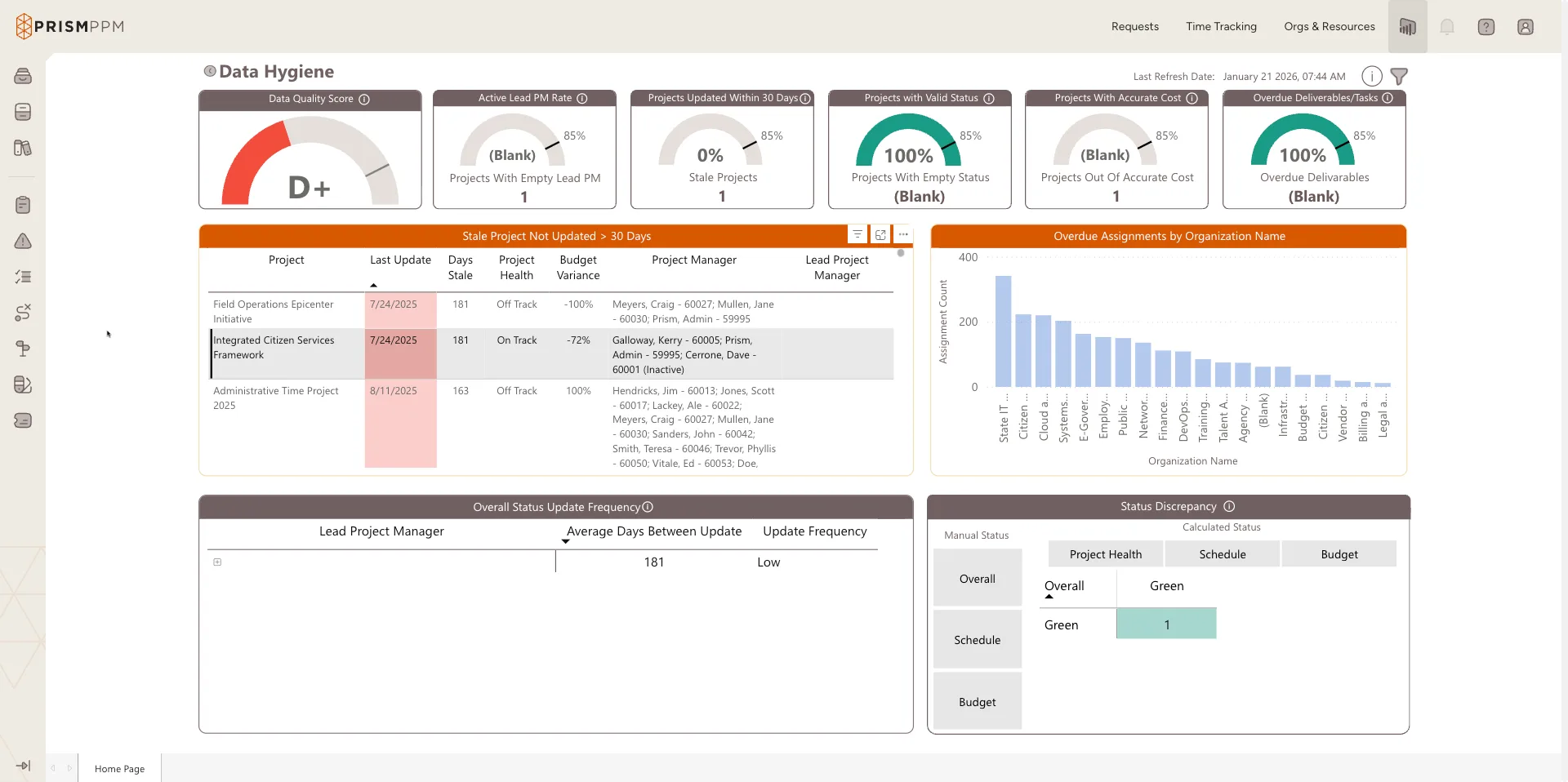
A platform for portfolio project management in manufacturing gives you greater visibility into performance. You will achieve greater control and governance of your projects. PPM tools equip you with real-time insights through dashboards and custom reporting. That means end-to-end visibility, giving you in-depth information about your project health to make informed, data-driven decisions and improve processes.
Planning and Forecasting
Features like what-if scenario planning features help you forecast resource constraints and changing situations. That allows you to adjust your plans to account for various scenarios, keeping your projects under control. You will better manage capacity, forecast lead times, align schedules, optimize planning, and adapt to changing organization and market conditions and demands.
Automation and Efficiency
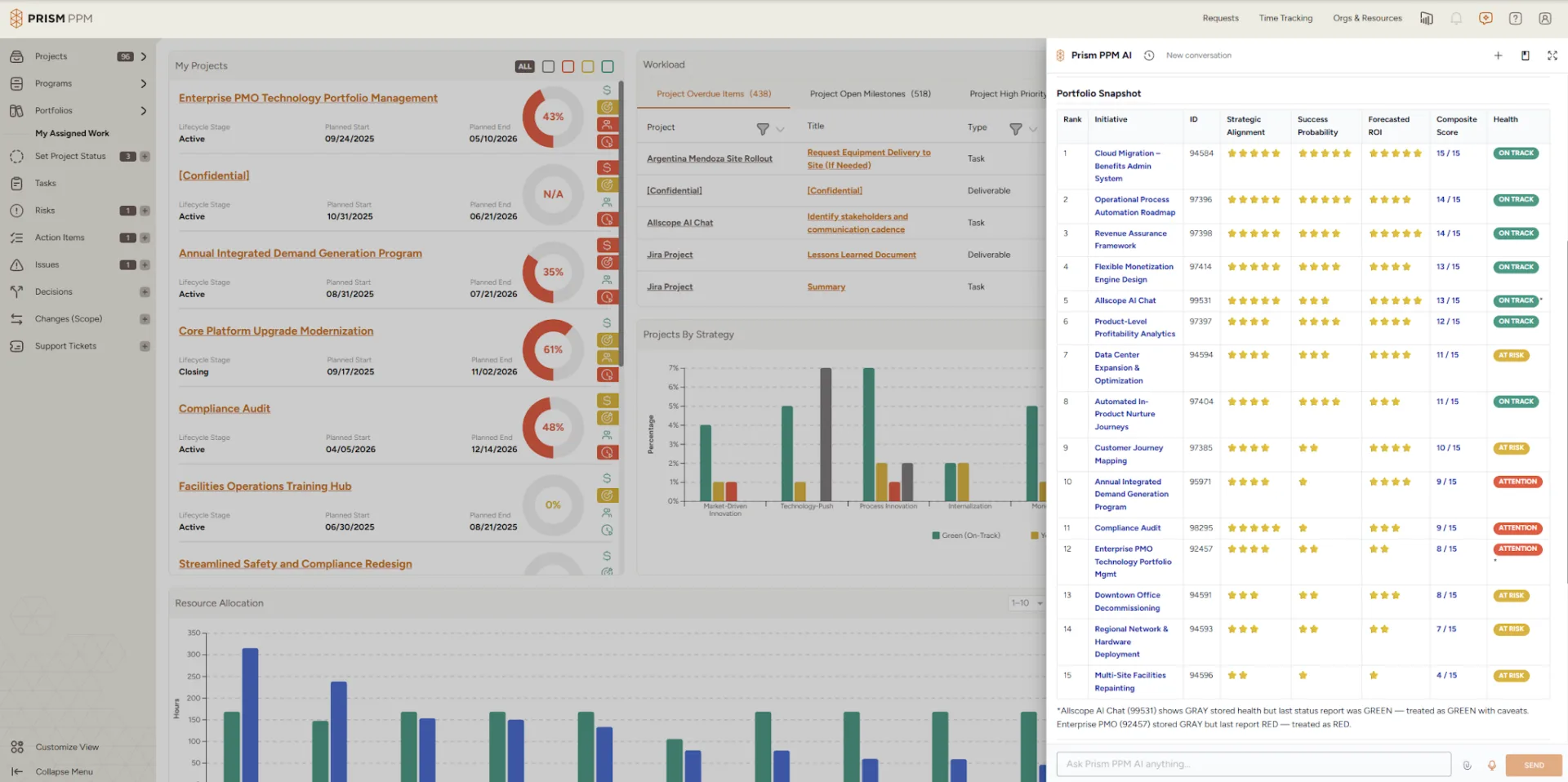
AI and automation features in PPM tools for manufacturing industry sectors help you increase efficiency. They allow you to reduce instances of human error, automate rote and repetitive tasks, keep your workflows moving without intervention, and ensure consistency. This boosts the odds of timely project completion and product delivery.
Compliance and Security
Organizations in the manufacturing industry must comply with safety, quality, and protection requirements and regulations. PPM software helps you stay secure and compliant. It also gives you tools to protect your sensitive data, employees, customers, and reputation.
Accuracy and Consistency
Accurate data is the backbone of your business. You need a single source of truth for your project and portfolio information. With the best project portfolio management tools, you won’t have to deal with data errors. Instead of questioning the accuracy and completeness of your information, you can focus on improving project outcomes.
Risk Management
Manufacturing projects innately include risks. A PPM platform allows you to navigate uncertain terrain and proactively mitigate these risks, from supply chain disruptions to cybersecurity threats, with real-time monitoring, meticulous reporting, predictive analytics, automated alerts, and visibility into resource capacity.
Resource Management
Proper resource management means allocating your resources, including people, time, funds, and materials, to the projects that will deliver the most strategic value. A PPM platform dedicated to manufacturing gives you greater oversight into your projects and the resources you expend on them. Equipped with resource leveling tools, you can accurately plan for how to best utilize your resources, reduce waste, and operate more effectively and efficiently.
Collaboration
Interdepartmental collaboration is necessary for complex projects characteristic of the manufacturing industry. When you’re managing multifaceted projects across multiple departments, you need a means of simplifying and streamlining coordination. A PPM platform helps facilitate seamless collaboration and communication, no matter where team members are located.
Best Project Portfolio Management Tools for Manufacturing
How do you realize the benefits of portfolio project management in manufacturing? Let’s explore the best project portfolio management tools for manufacturers.
Prism PPM
One of the most robust PPM platforms for manufacturers on the market, Prism PPM allows you to simplify and manage complex, end-to-end workflows. Equipped with resource allocation and utilization reports, budgeting, workflow automation, real-time monitoring and status reports, scheduling, and advanced reporting and analytics capabilities, the tool is highly customizable.
You’ll get visual planning tools like automated workflows, enhanced visibility, comprehensive reporting, dynamic resource allocation, automated alerts and milestone tracking, agentic AI to handle everything from data hygiene audits to building detailed project plans, and modern reporting and analytics to generate real-time project insights.
Pros
- Highly scalable; grows with your business
- Offers comprehensive onboarding, including an initial consultation, training, and ongoing support
- Adaptable and flexible, with customizable templates and features
- Built-in AI and embedded BI dashboards keep the focus on efficiency and better decision-making
- What-if scenario planning allows you to forecast and adjust to unforeseen circumstances
Cons
- May be overwhelming and complex for smaller teams
- Less mature teams may experience a learning curve
Oracle Primavera
Ideal for streamlining phase-gate workflows necessary for production in manufacturing, Oracle Primavera is geared toward large-scale organizations grappling with many projects. The tool is well-suited to manufacturing, which demands detailed tracking and precision.
With strong resource allocation, visibility into processes and projects, real-time dashboards and what-if scenario simulation, and precision scheduling, Oracle Primavera facilitates cross-departmental collaboration and accelerates product launch, particularly for resource-intensive and highly complex projects.
Pros
- Offers holistic enterprise portfolio visibility
- Provides robust resource management, including features allowing you to create a work breakdown structure
- Built-in risk management tools
- Comprehensive reporting tools
Cons
- Costlier than some competitors
- Steep learning curve
- Overly complex for smaller projects and teams
- Overwhelming user interface
Planview
Well-suited to product lifecycle management and managing R&D pipelines and product launches, Planview offers both high-level and detailed visibility into large project portfolios. Using the tool, organizations can centralize their PPM efforts in a single platform.
Planview also offers features like resource and capacity planning, financial management, and Gantt charts, while helping mitigate risks associated with supply/demand and product development and launch.
Pros
- Supports efficient planning and project management
- Provides comprehensive reporting
- Offers what-if scenario planning
Cons
- Feature set may be more than low enterprise teams need or want to pay for
- Steep learning curve
- User interface is unintuitive and clunky
- Complex workflows and governance
Zoho Projects
With features like time tracking, task dependencies, custom blueprints, client and vendor portals, issue tracking, and document management, Zoho Projects facilitates workflow automation and on-time project delivery. The platform also includes built-in audit trails, cross-project dashboards, customizable dashboards, reporting and analytics, centralized documentation to help ensure compliance, and flexible task management.
Zoho has efficient resource management, with resource utilization charts, and facilitates quality control through features like quality checks and automated approvals.
Pros
- Highly customizable
- Cost-effective solution
- Easy to visualize task dependencies
- Efficient time-tracking system and automated alerts
Cons
- Not a true PPM tool; leans more toward day-to-day project management
- Steep learning curve
- Limited integrations with third-party apps
- Limited mobile app experience
Wrike
Wrike eliminates silos among manufacturing teams, such as engineering and execution, and centralizes and streamlines complex workflows and product lifecycles. Offering customizable workflows for handling various manufacturing processes, such as supply chain management and production, it provides compliance features, collaboration, document proofing, risk management, time tracking, and resource management tools.
The platform automates updates and approvals and enables cross-tagging and cross-departmental visibility to support collaboration, while integrating well with other major software solutions. Overall, Wrike supports process improvements and streamlines product delivery.
Pros
- Great for collaboration and task management
- Includes product manufacturing templates
- Provides clear executive dashboards
- Highly customizable
Cons
- Project data can become cluttered and disorganized without tight governance
- Complex setup
- Lacks native financial and budgeting depth for complex project budgeting and portfolio-level financial metrics
- Cost of ownership can grow steeply as you add features and tools like advanced automations
Smartsheet
Smartsheet, a cloud-based solution, bridges strategy with execution. With governance features and templates, it centralizes project requests and streamlines approvals, automates workflows, and helps standardize project intake. It also aids project prioritization and strategic alignment, incorporating resource management tools, real-time dashboards, and compliance features.
Smartsheet blends project management methodologies, including waterfall and Scrum/Kanban and enables collaboration with vendors and suppliers.
Pros
- Customizable
- Equipped with real-time visual dashboards
- Familiar, user-friendly interface and dynamic views
- Offers automated project provisioning
Cons
- Limited native resource management capabilities
- Advanced features like Control Center require premium add-ons or expensive tier upgrades
- Difficult to enforce data governance across teams (resulting in variable data and reporting)
Conclusion
Manufacturing IT projects have to run as efficiently as the business does. As your organization grows, you need the best project portfolio management tools on your side.
Intek Plastics soon realized the success of implementing Prism PPM, and teams across the organization quickly hopped on board. Thanks to the manufacturing project management software, Intek is better positioned for future acquisitions with standardized processes, optimized resources, and a scalable framework that speeds time to value.
Want to see for yourself? Book a custom demo to discover the benefits of Prism PPM in your manufacturing project portfolios.